
Holy Week 2026
As we enter our most holy days, I want to share with you some of the decisions I have made about the liturgies we will encounter for Palm Sunday, Maundy Thursday, Good Friday, and the Easter Vigil. Fr. Kristin has also written a guide to Holy Week for families with children, and you can read that here.
Palm Sunday
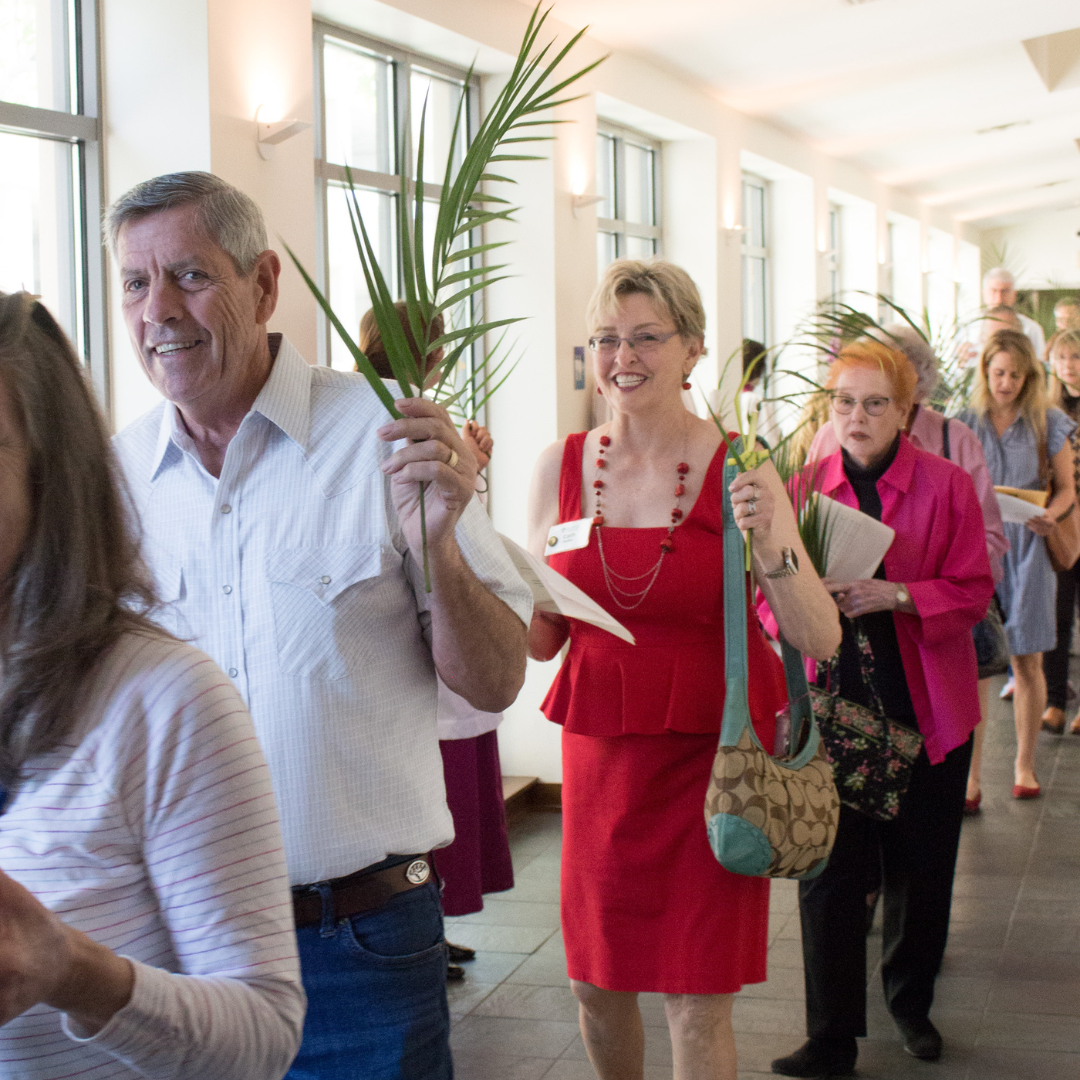
We will begin Palm Sunday with a celebration of Jesus’ triumphant entry into Jerusalem, and we’ll be invited to join the cheering crowd by waving palms and singing hosanas to our Lord. However, Palm Sunday quickly moves us from the perspective of the those greeting their Messiah to those calling for Jesus to be crucified. It is a jarring transition, and this year’s lectionary portion does nothing to shield our sensitivities or let us down easily.
Your musicians and I have decided to read the whole Passion narrative from Matthew’s Gospel, which means we’ll hear Matthew’s account of Jesus' Last Supper as well as the narrative of Judas’ betrayal. We will read or chant this Gospel in parts at 9 and 11:15, evoking the drama of these final moments in Jesus’ life.
I have, however, chosen to cut Matthew 27:25 from the Passion Gospel this year. This verse has long been associated with horrible antisemitic ideas and even violence, and to have the congregation read this verse as if we were a crowd of ancient Jews is neither historically accurate nor helpful to the real spiritual work of Palm Sunday for Christians today.
That work, beloveds, is to accept that we are not free of the impulses that led the crowd to move so quickly from “Hosana!” to “Let him be crucified!” It is to accept that we, not any other group, bear responsibility for the sin that led to Christ’s death and that despite our guilt, Jesus continues to love us beyond measure – even to the cross. To keep this line in forces a response in the sermon, and this year, I believe, I am being called to preach on other aspects of the Gospel.
For more about this, please read this article by the Rev. Dan Joslyn-Siemiatkoski who is a leading scholar in Jewish-Episcopal relations and worshiped here at St. David’s while he was a professor at Seminary of the Southwest. Dr. Joslyn-Siematkoski has written a liturgy that centers the triumphant entry on Palm Sunday rather than the Passion. This liturgy is being piloted in the Diocese of Massachusetts, and I am following closely to see if it might be an option for us in the future.
Maundy Thursday
Our Maundy Thursday observations will bring us to the Passover meal as John recounts it. We will share in the ritual of washing feet, putting ourselves in the place of a humble servant as Jesus did for us and also, crucially, accepting the loving care of others in our congregation as we have our feet washed.
I know I often find myself with Peter wanting to ask Jesus to skip me (and let me keep my shoes on!), but again, if we are to accept his work on the cross, we prepare ourselves by accepting his work with water and towel kneeling at the feet of those he loved – kneeling, indeed, at my feet and at yours. We’ll also share communion this night, taking our place at that final meal and taking the sacrament before we begin a 2-day fast from the sacrament.
Finally, we’ll close our liturgy by stripping and washing the altar. This sacred act reminds us of the altar as the ancient location of sacrifice, even the sacrifice of living animals during temple worship, and puts us in mind of Christ’s ultimate sacrifice on our behalf. We depart the worship in silence this evening.
Good Friday
Our Good Friday liturgy will follow the newer authorized version. This liturgy also owes a great deal to the scholarship of the Rev. Joslyn-Siemiatkoski. It adds additional prayers for Jewish people around the world as one small act of repentance for the ways in which Good Friday has been used as an excuse for violence against Jews in the past. It also crucially changes the mistranslated “Jews” to more accurate Judeans in our reading for John’s Passion narrative. St. David’s was a pilot congregation for the liturgy, and I am proud of our leadership to the whole Episcopal Church in addressing these concerns.
On Good Friday, we will ponder the cross together. The choir will continue its presentation of the remarkable Buxtehude cantatas. This year’s piece focuses on Christ’s knees during his agony. Read more about that in Eric’s Music Notes post. The service will also include silence, darkness, and the large wooden cross as the center image in our space. It will not include sacraments. This the one day a year when we experience Christ’s absence from us, and I invite you to let that lack enhance our Easter Joy.
Proper Liturgy for Holy Saturday
At noon on Holy Saturday, you are invited to a simple, spoken prayer service in Grace Chapel. The quiet, contemplative nature of this service invites you to sit a moment in the empty tomb, to rest in the not-yet of Christ’s Resurrection and to wait with the disciples for the unfolding of God’s plans across these holy days.
The Great Vigil of Easter
Please don’t miss the Vigil on Saturday evening. The “Queen of Liturgies” is overflowing with glorious, beautiful symbolism. We start with the darkness of Christ’s tomb, recalling ancient Christians who met in secret, and we will tell each other the whole story of God’s saving work, starting from the very moment of creation.
We will light a new fire, representing the new life opened to us in the Resurrection. We’ll baptize new Christians, claiming their place in the eternal life we share, and we will shout, ring bells, and make as much noise as we please to proclaim that Christ is indeed risen. If you go to no other Holy Week services, I hope you’ll be with us for this one.
Login To Leave Comment