Preview: Fall 2026 Adult Formation
We're excited to give you a preview of the classes we'll be offering this fall. Please continue reading for an overview of these classes and to register to attend. We look forward to seeing you.
Praying the Prayer Book
Wednesdays, 6:15 p.m.
Crail C
This class will meet every Wednesday at 6:15 p.m., Aug. 19-Sept. 30, with a scheduled break on Wednesday, Sept. 23.
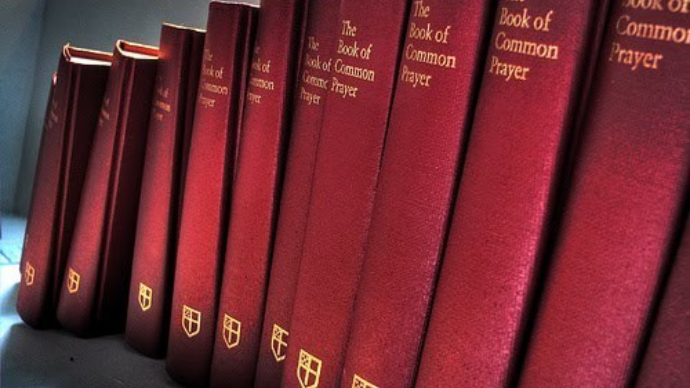
Have you ever wondered how to use the Book of Common Prayer on your own? It’s not just for Sunday mornings to look pretty in the pew racks! In this class, you will learn how to use the prayer book during the week to pray the Daily Office, look up the collects or readings for the day, and overcome any generalized prayerbook anxiety. This series is a great way to grow more comfortable and familiar with an incredible resource that is foundational to our Episcopal identity. This series will be led by several advanced MDiv students from the nearby Seminary of the Southwest.
Register for Praying the Prayer Book
Via Media: Understanding Anglicanism
Sundays, 10 a.m.
Crail C
This class will meet every Sunday at 10 a.m., Aug. 30-Sept. 20.
Anglicanism is often described as a middle way, a via media between many different Christian traditions. We are Protestant, and yet affirm the catholic faith in the Creeds. Our Prayer Book was influenced by the faith of Luther and the faith of Calvin. Some Episcopalians identify as evangelical, some as AngloCatholics, some as liberals, and some as conservatives. Come learn how our tradition walks the tightrope between competing traditions to create a unique, nourishing, and comprehensive way of being a Christian with room for all within the guard rails of Anglican theology and tradition. This series will be taught by a combination of St. David's clergy and faculty from nearby universities and seminaries.
Register for Via Media: Understanding Anglicanism
"Stewardship for Sweaty People:
Talking About God and Money with Grace"
Sundays, 10 a.m.
Crail C
This class will be led by Director of Stewardship and Planned Giving, Eric Malnassy, and will meet every Sunday at 10 a.m., Sept. 27-Oct. 11.
Join us for a three-week, prayerful journey in which we will talk comprehensively about stewardship. In our first week, we will consider together the biblical, canonical, and spiritual call of stewardship. In the second week, we will discuss the practicalities of funeral planning and estate planning. For our last week, we will discuss what everyday stewardship looks like and how God calls us individually and together to the work of sharing time, talent, and treasure.
Register for Stewardship for Sweaty People
The Book of Job
Wednesdays, 6:15 p.m.
Crail C
This class will meet every Wednesday at 6:15 p.m., Oct. 7-28. The last class on Oct. 28 will meet at the Guild Parlor.
Join us for a challenging and intimate journey with on of the Bible’s most difficult and enigmatic figures. Job had everything until he didn’t. Who is to blame? God? Satan? Job himself? Over the course of the book, Job and four of his friends debate and discuss the nature of suffering, righteousness, and what it means to trust God. Using Edward L Greenstein’s translation, we will consider Job in its context as an ancient text, the peculiarity that it made it into the Bible, and what Job’s lament teaches us about faithfulness in complaint.
Register for How Great a Cloud of Witnesses
Resurrection Hopes, Political Dreams
Sundays, 10 a.m.
Crail C
This class will meet on Sundays at 10 a.m., Nov. 1-8.
What does God owe in the resurrection to sexed bodies, gendered bodies, raced bodies, disabled bodies, and embodied identities? How do our future hopes of bodily resurrection inform how we live now? What is a faithful response of embodiment in the political sphere if we are certain of what we hope for in the world to come? Our lives are increasingly assumed to belong to the immaterial world of social media, digital echo chambers, and AI. This reality is presented as inevitable, unavoidable, and necessary to keep up with the times. And yet, Christian theologies of embodiment would caution us in being so quick to assume progress itself is always good or without cost. The same spaces that allow a freedom of personal expression can also separate humanity from our material bodies, making it easier to think of people created in God’s image and likeness as disembodied ideas, not enfleshed souls whose embodiment matters to God.
Paths of Contemplation:
Exploring the Mystery of Prayer
Wednesdays, 6:15 p.m.
Crail C
This class will meet every Wednesday at 6:15 p.m., Nov. 4-18.
St. David's is known for its voracious appetite for learning and doing. Both of these are wonderful things. But spiritual formation has another important aspect – that of contemplation and mystery. Over the next three weeks, Rebecca Hall (Director of The Abbey and Director of Programs for the Iona Collaborative) will be guiding parishioners through various forms of contemplative prayer, inviting us to step out upon waters, beyond certainty, where Christ is waiting to meet us.
Register for Paths of Contemplation
You Have Heard it Said
Sundays, 10 a.m.
Crail C
This class will meet every Sunday at 10 a.m., Nov. 15 through Dec. 20.
What does Jesus’s incarnate body have to say to us about how God feels about bodies and their goodness? What does the legislative outlook for this coming year mean for bodies and what is a faithful, embodied response? What does God owe in the resurrection to sexed bodies, gendered bodies, raced bodies, disabled bodies, and embodied identities? How do our future hopes of bodily resurrection inform how we live now? What is a faithful response of embodiment when AI is presented to us naturally inevitable but it raises significant ethical concerns? Our lives are increasingly assumed to belong to the immaterial world of social media, digital echo chambers, and AI. This reality is presented as inevitable, unavoidable, and necessary to keep up with the times. And yet, Christian theologies of embodiment would caution us in being so quick to assume progress itself is always good or without cost. The same spaces that allow a freedom of personal expression can also separate humanity from our material bodies, making it easier to think of people created in God’s image and likeness as disembodied ideas, not enfleshed souls whose embodiment matters to God.
For more information, please contact the Rev. Preston Yancey, interim director of Adult Formation: .
Login To Leave Comment